Showing posts with label english. Show all posts

Saturday, 31 January 2026

A Night for Dick Gaughan at Celtic Connections 2026


Gaughan is a voice of deep humanity in our present dark world. 

And a Message from Chicago, that spoke of playing Gaughan’s songs on the long drives to work to remind him of our shared humanity, in these dark times facing Americans today 


Gaughan brought many of the traditional Irish and Scots Celtic songs to new life. I’d never heard Robert Burns Westlin Winds before Gaugan introduced this as one of the best songs ever written. Guaghan searched through the Scottish national archives for the best traditional ballads. Like Burns and Dylan before him Gaughan has been a genius song collector and remaker of the old songs. Gaughan drew on his Scots and Irish traditions to develop his song craft and performance. 


I first heard Dick Gaughan in the 70s at the Police folk club Edinburgh. A musician friend raved about how incredible and distinctive his guitar playing was. Many years later (after being in America for nearly ten years) I heard Gaughan again at Milngavie Folk club in 2007. This was an intimate gig where his chat and stories between songs while he tuned his guitar, was worth going for alone. In his own distinctive voice, Gaughan hammers and speaks with his acoustic guitar.


Testament to Dick’s fame and widespread appeal among legends of the folk music scene, several had travelled far and wide to perform tonight from Ireland, England and Scotland, to perform Gaughan’s well loved songs. 


Mike Harding
**The CONCERT

What a joyful celebration of the legend that is Dick Gaughan – the most influential folk artist, musician and singer of the folk song of the 20th century. 


The Dick Gaughan tribute concert was amazing! So emotional, so many folk icons. He’s the most respected Scots folk artist, song collector and awesome guitarist of the past century. The concert began with a black and white video of Gaughan performing at a folk singing session back in the 70s. 

Tonight’s concert was hosted by presenter Mike Harding and comedian Stewart Lee. Harding read warm messages from fans and from several folk icons – Ralph McTell, Peggy Seeger and more. And a Message from Chicago, that spoke of playing Gaughan’s songs on the long drives to work to remind him of our shared humanity, in these dark times facing Americans today 


There was a lot of love and camaraderie in the room tonight! The quality house band boasted Michael McGoldrickEuan Burton, Innes White, Dave Milligan, Megan Henderson, Louis Abbott, They played an energetic opening performance of Workers’ Song, sung by Paul McKenna, Karine Polwart, Kris Drever, and Siobhan Miller.  


Karen Matheson
Ross and Lorraine Macintosh 
Karine Polwart

This was followed by the song Erin Go Brach sung by Paul McKenna. There were performances by accomplished guitarists – Martin Simpson, Kris Drever, Brian McNeill, Paul McKenna and Seamie O’Dowd.  And moving singers - Karen Matheson with the song Language of the GaelsKarine Polwart sang an intimate Craigie Hill. While Ricky Ross and Lorraine Macintosh of Deacon Blue, sang Wages Day.


Lisa O'Neil
Seamie O'Dowd

The Irish folk artists impressed – Lisa O’Neil sang two of her own songs: Rock the Machine, and The Wind Doesn’t Blow This Far Right.Karen Casey who performed The haunting The Snows they melt the Soonest.

There was a powerful performance by Billy Bragg, with the song The World Turned Upside Down. The second set began with Kris Dreversinging Gaughan’s most loved Burns song, Westlin WindsThe Irish guitarist Seamie O’Dowd who performed Song for Ireland was so good, one of those hushed silence moments….  And an emotional performance by Martyn McCarthy of the song Bonny Woodha carefully assisted by Eliza McCarthy, and given warm applause by the audience. 

Dick Gaughan was there towards the end and sang a bit – the song The Shipyard’s Apprentice as a tribute to Archie Fisher. The passing of a generation. The concert finished with the rousing community singing of a Gaughan favourite Both Sides the Tweed, a song of unity and hope, led by Matheson, Casey, Bragg and Polwart. And after by Hamish Henderson’s social call Freedom Come all Ye. 

Martyn McCarthy & Eliza McCarthy
Dick Gaughan

Billy Bragg
Siobhan Miller
Billy Bragg, Karen Matheson & Karen Casey

Songs of social conscience and of contrast, quality and sincerity. Gaughan has became a legend on the Scottish and world folk circuits for more than 40 years. He is an interpreter of Scotland’s traditional folk ballads with his distinctive style of guitar playing, with open chords and timing that he learnt from guitarist Davey Graham. 


Gaughan is Scots/ Irish and has spent his life in Leith Edinburgh. He’s a social protester, a profound storyteller who crosses boundaries, forges alliances through the depth of his story telling, song and dramatic guitar playing. His songs don’t flow easily to the shore and they also share the full range of emotions.  Gaughan is plain spoken and holds firmly held beliefs on the rights of everyman. 


Tonight was a wonderful tribute and celebration to Gaughan’s genuine authenticity. He cares about the truth of things and of digging below the surface for the stories behind the songs. What an excellent song list and cast of musicians, a veritable who’s who of the folk scene, for what proved a most memorable, poignant and quality concert. The joy and enthusiasm of the performers was palpable. 


So glad to hope the younger generations are carrying the stream. (More so in Ireland perhaps?). I have to admit the most emotional Celtic concert I’ve been to. So many memories….You come away from his gigs questioning and renewed in the faith of our shared humanity. 


**SONGS – Erin Go Bragh, Workers Song, The Snows they Melt the Soonest, No Gods, Wages Day, Language of the Gaels, Song for Ireland, Westlin winds, Daughters and Sons, Craigie Hill, What you do with what you’ve got,  Both Sides the Tweed.

Gaughan is plain spoken and holds firmly held beliefs on the rights of everyman. Gaughan had a stroke in 2016, which means he can no longer play the guitar. He’s not been able to play for nearly ten years. Gaughan’s album Handful of Earth became an iconic folk album. 

·       (R/evolution: 1969–83) was released in January 2026 along with 

·       Live at the BBC: 1972–79 (vinyl). 


* The concert was recorded by BBC Radio Scotland. (Celtic concerts used to be recorded by the BBC Scotland tv.)


GUITAR  Earthy, real and powerful guitar playing, an incredible presence and depth. Gaughan says his guitars is an integral part of his singing. The Song has a tempo all of its own. The guitar has to follow the song. His distinctive style of guitar playing, with open chords and timing that he learnt from guitarist Davey Graham which was tuned differently. 


Karine Polwart

Ricky Ross and Lorraine MacIntosh, 

Billy Bragg

Kris Drever

Paul Mckenna

Siobhan Miller

Karen Matheson, 

Martin and Eliza Carthy

Michael McGoldrick

Martin Simpson

Tommy Sands

Karan Casey

Brian McNeil

Seamie O'Dowd  

Lisa O'Neil 


From Ireland – Karen Casey, Tommy Sands, Lisa O’Neill, Seamie O’Dowd.

From England  Billy Bragg, Martyn Carthy, Martin Simpson, Michael McGoldrick

From Scotland – Ricky Ross, Lorraine Macintosh, Karine Polwart, Kris Drever, Karen Matheson, Siobhan Miller, Brian McNeill, Paul McKenna.


(Gaughan is challenging Celtic Music over the copyright ownership rights of of his music. Colin Harper has set up Go fund Campaign. Gaughan has never been paid any royalties. With Photography I allow people to ‘use’ to my photos, but I never loose copyright ownership. His music has been held back from streaming and Celtic Music claims ownership of eight albums from 1972. Other musicians have also battled over ownership of their music.)


Tuesday, 30 September 2025

Revival Scots Language


I attended a talk last week by the Scots poet Len Pennie at Dreamworks Bookshop Milngavie

Pennie’s poems have more lilting lyrical musicality than her English poetry. Her poems pack immediate emotional directness and punch. She says it was all the grandmothers who kept the Scots voices and language alive. 


Welsh Labour are proud of Welsh Gaelic and the Welsh flag. We cannot say the same of Scottish labour, would they stand in front of the saltire and speak in Scots Gaelic or Scots? There’s been a long story of religious divisions in Scotland – the divide and rule tactic of the empire elites.


She suffered dreadful trolling online abuse. For many years the Scots language has been treated as a ‘pretendy language’ and oddly often by hostile Scots, it’s a centuries old saga. Yet Scots have been historically influenced by their connections and trade to Flanders and Ireland. 


II  Back when James VI held a clan gathering on Iona, he insisted that the clans had their eldest son educated in England, and taught to speak ‘correct English’. This practice continues to this day, with the private school accents. All the assimilation, repression of cultural difference. In the 20thcentury English managers and middle class professionals came to Scotland – and Scots speaking workers were treated as second class citizens in their own country. 


The opposite was true back after union 1700s though – the Scots were the workers of the British empire, when after Reformation many Scots were highly educated and there were more ancient universities in Scotland – 


So what changed?

During the 1700s several poets wrote to keep the scots language alive  - Allan Ramsey, Robert Fergusson and notably Robert Burns. Burns wrote in English, the language of his education in books. But it was when he read the Scots poems of Fergusson he was inspired to write in Scots, the language closest to his heart. His mother knew and sang all the old Scots ballads. Burns collected, added to and edited the auld Scots songs from his many Scotia travels. 


English is of course the global language after the spread of the British empire. But crucially cultural diversity matters so much – both back in Burns day and today. We can have global trade and connectedness AND also have our own voices. We can have both. Why must it be either or?


For decades Scots children were rapped over the knuckles if they spoke with a Scots accent or belted if they used Scots words or dialects. Broadcaster Lorraine Kelly was initially told she must tone down her Scots accent if she wanted to be successful - and she thought why should I? 


In the 1950s most radio and tv presenters spoke with a clipped Oxford English. Today we have many accents – yet worryingly Scots students attending Edinburgh university continue to be mocked for speaking with a Scots accent – and told to ‘speak more correctly’ by English private school students. When I travelled across Edinburgh on the top of the bus I heard English accents of students in brightly coloured blazers and thought, where are they from? Around 25% of Edinburgh students attend private schools. This creates an unhealthy two-tier society which holds many children back.  


At Celtic Connections there are many hauntingly beautiful Gaelic singers 

When Scots writer Billy Kay gave a speech in Scot in the Scottish parliament, he was ridiculed by many Scots. The usual Scots versus Scots. In Switzerland they can speak both local and high German languages – the two languages sit by side by side and not in opposition to each other.


Why must Scots chose a side? Religious wars are now centuries old – while the British Constitution of 1688 continues to dominate. Why cant we have English and Scots and Scots Gaelic alongside each other?


The Scots language is not merely a side issue – its crucial to our Scots identity and unique voice. Diversity matters. 


**The Scots language has been recognised on Spotify – Iona Fyfe


Scots is now taught in Scottish schools


Saturday, 30 August 2025

Cultural History Disconnects

Cultural History Disconnects


I had a big disconnect between my primary school and secondary school. At primary we had Scottish dancing, Scots poetry and song. Then at secondary we had no Scottish history, culture or music at all. Only English literature, history and music. Quite a strange disconnect. We used to go to the military tattoo at the castle every year. 


Then I attended college down the cobbled royal mile Edinburgh, and wondered about all the history here – the Canongate Kirkyard, John Knox house, St Giles, Holyrood, the Grassmarket – and the castle. 


Going to secondary school Edina, I travelled across the town by bus via princes street. I passed a statue to the Scotch Bard Robert Burns at the bottom of Leith walk each day. On the top deck there were many teenagers in brightly coloured blazers who spoke with posh English accents and I wondered where they came from. In Edina around 25% of children attend private schools. 


No it wasn’t and isn’t an integrated melting pot at all but a stiff social hierarchy here. Back in the 60s though, young people had more options to go to study. Houses were built to offer greater social mixing, but that often hasn't succeeded. When people don't feel they have things in common, many put up defensive barriers. 


Visiting Holyrood palace I once picked up a small blue book on the Stuart kings of Scotland. I became fascinated by the Scots history and stories. I visited the Scottish national galleries, with their many portraits of Scottish royalty. My parents were from Northern Ireland, so I was very confused, as no doubt they were too. 


Saturday, 31 May 2025

What does the English Party Reform UK - offer Scotland?

Has modern politics become all about money? And who can pay for the best clickbait ads on social media? We thought online might bring improved and open debates. But that requires more effort.

Instead online offers the instant solutions – lazy point scoring and no shades of grey in-between. There’s only good and bad. A comic book view of the world. Especially with the Trump person, who reminds me of the Joker. Except its not funny at all. Now we have the Mega influence arriving on British soil with English party Reform UK: who offer English nationalism. Its run by millionaires who only care about themselves.


What does Reform UK offer Scotland? - Britain is the most centralized western country – Reform will offer more centralization in a crumbling Westminster. Why should a group of people in London offices decide and implement on issues that are mainly relevant for Scotland?


 What reform is Reform UK talking about? - More control by Westminster – less taxes for the rich, blaming and scapegoating the ‘other’ ; or being more aligned to America than Europe.


Scotland’s population is declining without immigration. We need to be in Europe, our natural allies. (Why does Scotland need more housing if our population is declining, is it older homes that need repaired?)


Scotland needs the opposite of what Reform UK is offering?! Scotland needs our democratic rights to self determination – control of our own resources, (already squandered by countless greedy capitalists); to be closer to Europe; and to have more immigration of health and care workers.

Scotland doesn’t believe we are better than any others. All Scots want is a seat at the table. .


Friday, 30 December 2022

Song Bird Christine McVie


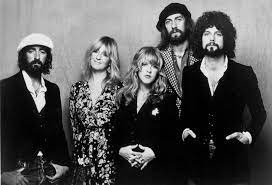
Fleetwood Mac 1970s

I was deeply saddened to hear of the death of our beautiful songbird Christine McVie. – best known for songs with the rock band Fleetwood Mac such as Don’t Stop, Little Lies, Hold On, and of course her classic Songbird. She says the song came to her overnight and she had to keep singing it until morning when she was able to then record! 


Christine began playing with Fleetwood Mac in 1968, initially as a session player and joining the band in 1970. Her first compositions with Fleetwood Mac appeared on their fifth album, Future Games. She remained with the band through many changes of line-up, writing songs and performing lead vocals. 

In early 1970s the band moved to LA after the death of Peter Green and Lindsay Buckingham and Stevie Nicks joined. Christine and Stevie were great friends. Rumours is one of my all time favourite albums. 


Christine spoke of her long standing friendship with Stevie Nicks -  “We're totally different, but totally sympathetic with each other. We are dear, dear friends. We don't have any competition on stage,” McVie told Rolling Stone of her band mate Nicks in 2014; that was but one of the many compliments the two artists have exchanged in public over the years.”

Fleetwood Mac were distinctive being led musically by two women! Also for mixing English rock and LA sounds. 


Lindsay Buckingham & Christine McVie


In 1998, after 30 years with the band, she left and returned to England to set up home there. She then lived in semi-retirement, releasing a solo album in 2004. After therapy to over come her fear of flying she was able to visit band mate drummer Mick Fleetwood in Hawaii and returned to playing with the band. She also recorded an album with L
indsay Buckingham.

Reunion Fleetwood Mac 2014

McVie was an English musician and songwriter. She was best known as keyboardist and one of the vocalists of Fleetwood Mac. McVie was a member of several bands, notably Chicken Shack, in the mid-1960s British blues scene

She was described as "the prime mover behind some of Fleetwood Mac's biggest hits". Eight songs written or co-written by McVie, including - “Don’t Stop, Everywhere, Little Lies, Hold On, (on Fleetwood Macs 1988 Greatest Hits album)

She played on the band's last studio album, Say You Will. McVie also released three solo studio albums. As a member of Fleetwood Mac, McVie was inducted into the Rock and Roll Hall of Fame and in 1998 received the Brit Award for Outstanding Contribution to Music.

She appeared on stage with Fleetwood Mac at the O2 Arena London 2013 and rejoined the band in 2014 and for their On the Show tour 2014. McVie received a Gold Badge of Merit Award from BASCA, the Ivor Novello award for Lifetime achievement. She was also the recipient of two Grammy awards


Tuesday, 31 May 2022

Scottish Art and Anti-Scottish lobby


The Scottish Reformation 16th century introduced a democratic structure to run the church and education for all. Scots were the most educated people in Europe. 

However in recent times those recruited to run Scottish arts have been mainly recruited from England, who clearly have no knowledge of Scots heritage, history, language, music or arts. And this is "all designed to imply that Scotland is a dull backwater which has never produced anything of importance.” - writes Paul Henderson Scott in his book Scotland: A Creative Past. This was also a result of the extreme centralising in the UK during the wars of the 20th century.


The exception is Celtic Connections, whose artistic director is Donald Shaw from Oban (Capercaillie). In a new improvement in 2022, violinist Nicola Benedetti has become the first Scots (and first woman) director of Edinburgh festival. Nick Barley from Yorkshire, is director of Edinburgh book festival. 


- In her article Scotsman Carol Craig writes  of, ‘The Scottish crisis of confidence about Scots feelings of inferiority.”


- Crawford Beveridge, first chief executive of Scottish enterprises 1990s, stated that the major problem facing Scotland is “a lack of self-belief.”


 How can this be true in a country that has contributed so much to the world in ideas, inventions, literature and arts? The answer is that education of many Scots has left them in complete ignorance of all of that. London became the main centre of the British empire. Back early 17th century, James Stewart VI of Scotland and England  in a treaty with clan chiefs on Iona, had them agree that their eldest sons would be educated in England.


One problem is the number of private schools in Edinburgh (at 25%) and with English students dominating Edinburgh university and St Andrews. #¥esScots


BOOK – Scotland: a creative past, an independent future, Paul Henderson Scott-

https://blackwells.co.kshop/product/