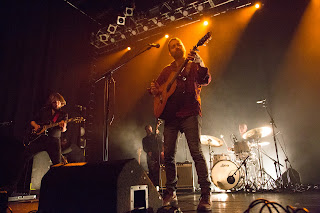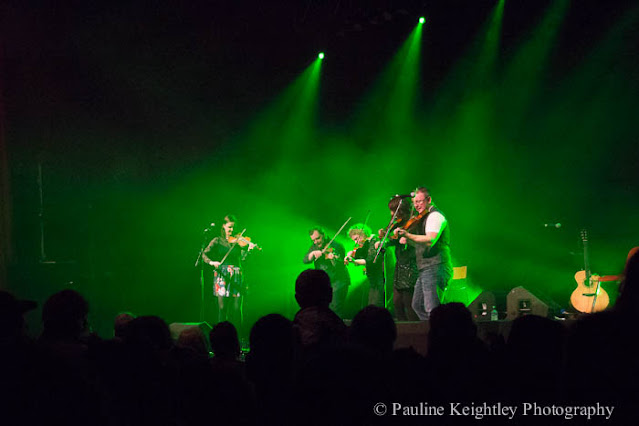
Tuesday, 11 January 2022

Celtic Connections 2022 cancelled events due to Covid


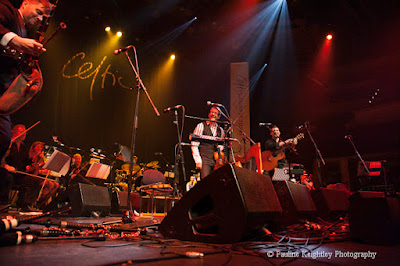
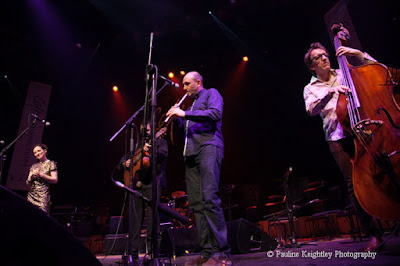
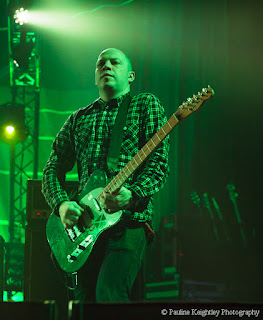
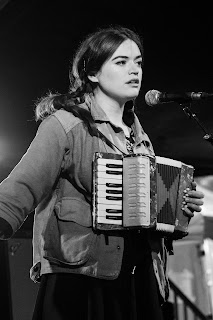
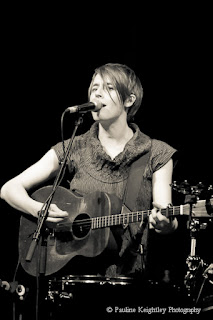
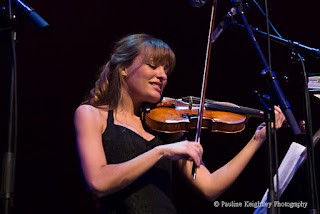
It's sad about Celtic Connections having to cancel some concerts, but they are now offering a Digital festival from 26th January.

THE ORGANISERS Celtic Connections music festival have announced that several shows will be cancelled due to the uncertainty around Covid.

FM Nicola Sturgeon announced that she hopes to be able to lift the current restrictions on indoor events on January 24 2022, so hopes are growing that this month's Celtic Connections festival, January 20, can go ahead to some extent, while some events have already been cancelled.

Celtic Connections  have announced it was with "a heavy heart" that they were confirming a number of shows within the programme are no longer able to go ahead. They are in the process of contacting impacted artists regarding cancellations and expect the majority of shows to be affected by restrictions in some way.

 "Our ambition for the 29th edition of the festival was to bring everyone together once again, however the uncertainty and disruption caused by the Omicron variant has meant it is not feasible for us to continue with our existing plans on the scale we had originally hoped.

"Artists and ticketholders for the shows affected so far are being contacted directly and we would like to thank everyone for their ongoing support and patience.  We have not come to these decisions lightly and are committed to presenting a form of the festival which brings the connection and joy of Celtic Connections to audiences, while being both feasible and safe for all involved.

"We are currently working through many different scenarios and options and reviewing all shows in line with existing event restrictions. We will continue to keep our audiences up to date as the plans for Celtic Connections 2022 evolve."

The opening concert, ‘Neath The Gloamin’ Star, was to feature younger musicians and songwriters.
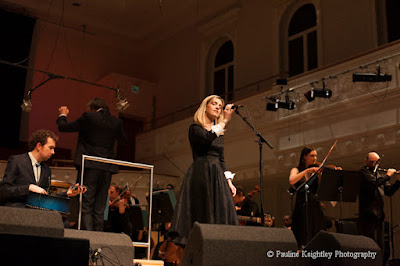
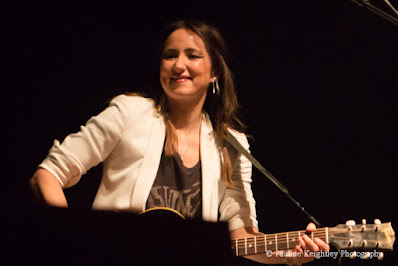
Cara Dillon


Before Christmas organisers said restrictions and the timeline against future reviews presented significant challenges for the festival. However, with restrictions placed onaudience numbers for indoor events at just 200 for all-seater shows and 100 for standing, and one-metre distancing, shows have sadly been cancelled.

The event, promoted by Glasgow Life, the charitable trust which runs the city's culture and leisure services, was due to be held in Glasgow from January 20 to February 6, with an 18-day programme featuring traditional folk, roots, Americana, jazz, soul and world music. More than 1,000 musicians were due to take part in the 29th edition of the concert series.

The online version of the festival in 2021 sold more than 27,000 tickets and attracted audiences from over 60 different countries, with more than 10.5 million minutes of musical entertainment viewed over a 19-day programme.  Previous festivals have featured Robert Plant, Laura Marling, the Chieftains, Bobby Womack to name a few - and more than 100,000 attendances.

https://www.celticconnections.com
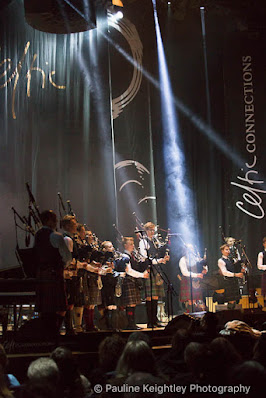

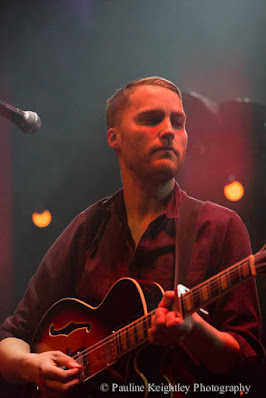
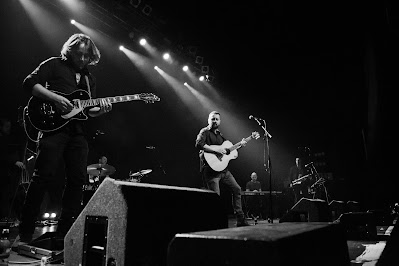
Adam Holmes

 
**Some events have already been cancelled, however. Below is a list of the affected performances.

Roaming Roots, Glasgow Royal Concert Hall, January 23

Dean Owen at CCA, January 28

Geraint Watkins Band and Emma Jane, Drygate Brewery, January 21


Shetland 550, The Mackintosh Church, January 21

Ceilidh With The Peter Wood Band, National Piping Centre, January 22

The Lonesome Ace Stringband & The Magpies, Mitchell theatre January 22

Elephant Sessions 10th Anniversary Special, Glasgow Barrowland, January 22 (re-scheduled for September 23)

The Conundrum: International Piping Night, Glasgow Royal Concert Hall (New Auditorium), January 22

Neal Francis and Unoma Okudo, Drygate Brewery, January 22


An Tobar: 25 Years, Drygate Brewery, January 23

Megan Henderson with Ainsley Hamill: Not Just Ship Land, Mitchell Theatre, January 23

Frankie Gavin and Màirtìn Ò Connor and Stundom, Glasgow Royal Concert Hall (New Auditorium), January 23

Le Vent Du Nord, Old Fruitmarket, January 28

Ian Fraser with Josie Duncan, Mitchell Theatre, January 28

Spiers & Boden, Òran Mór, January 28

Astrid and Ewan Macfarlane, Drygate Brewery, January 27

Lera Lynn and Donovan Woods, CCA, January 27

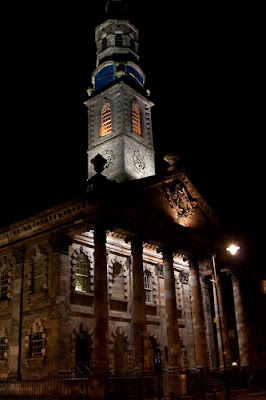
Allison Russell and Ala de Liona and Emily Scott Robinson, Saint Luke’s, January 26

Breabach with Beòlach, Glasgow Royal Concert Hall, January 26

Jason Wilson’s Ashara, CCA, January 29

Leventime: A Tribute To Jackie Leven, Òran Mór, January 29

Stina Marie Claire, CCA, January 30

Andrew Wasylyk and Twelfth Day, Mitchell Theatre, January 30

Hamish Henderson Night: Ballad Of The Banffies, Glasgow Royal Concert Hall, January 30

Jill Jackson and Lady Nade, Old Fruitmarket, January 30


Annabelle Chvostek and Elaine Lennon, Glasgow Royal Concert Hall (Strathclyde Suite), January 31

Kate Rusby, Glasgow Royal Concert Hall, February 1

Rachel Baiman and Cahalen Morrison, Glasgow Royal Concert Hall (Strathclyde Suite), February 1

Catriona Price, Mitchell Theatre, February 2

Amadou & Mariam, Glasgow Royal Concert Hall, February 2

Darlingside, Saint Luke’s, February 2

Dervish, Glasgow Royal Concert Hall, February 3

Tom Oakes, National Piping Centre, February 3

The Mastersons and Julia Taylor, CCA, February 4

Ryan Young and Chris Amer with Janice Burns and Jon Doran, National Piping Centre, February 4

Roddy Hart And The Lonesome Fire, Saint Luke’s, February 6

Friday, 31 December 2021

Times of Change 2021


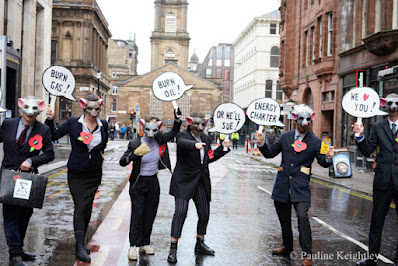
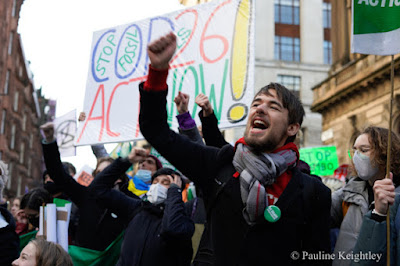
COP 26 march

Covid is here to stay in its many different forms. 

It is now about how we learn to live with Covid. We may not be able to return to those large scale events we used to love .... as much as before. Then again I’ve really enjoyed many small intimate gigs, but will my local folk club return any time soon? 

We’ll have to learn to live and shop on a more local level – and not enjoy unnecessary flights. Do we really need 6 trips  a year, causing needless pollution and emissions.


The COP 26 Glasgow happened, but it seemed the real action was happening on the streets. 


Some Anglo-British Tories claim they believe in “liberty” but liberty for whom – for Scots with 7 mandates for independence? 


We’re all trying to learn to live with Covid, which at times has been okay getting back to a concert in August – Chrissie Hynde at the Queens hall Edinburgh -  and even the cinema to see the amazing Sci-fi film Dune. Will Celtic Connections actually happen, will life return to a normality?


But the hospitals are under great strain with a lack of staff, so all this is not so great. Many people are now moving closer to their families. One thing recent times have taught us, is  the need for resiliecet in the face of seismic change and the importance of family!


 Happy New Year and hoping for the best for 2022!


Scottish Music 2021


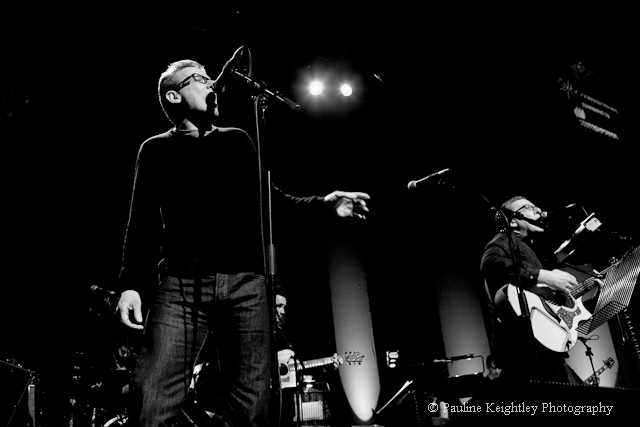
Proclaimers

The BBC's St Andrews day Program, featured many of Scotland's best loved artists from the 80s – Proclaimers, Texas, Simple Minds, Del Amitri, Deacon Blue, Travis, Wet Wet Wet, with these bands still touring today. 

Scotland certainly punched above its size for bands from the 80s and 90s! 


However many pf the Scots artists of today were not included – what about Chvrches, Lewis Capaldi, KT Tunstall, Mogwai, Biffy Clyro, although Calvin Harris and Emeli Sande were included.


There is a uniqueness to Scottish music, which mixes traditional folk melody and the heart of ballads, with contemporary influences, instruments and beats and rhythms – often in unexpected and unusual combinations.


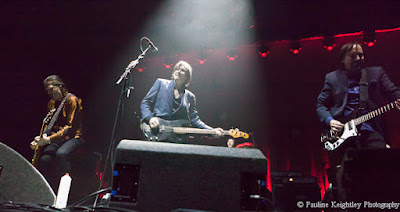
Del Amitri
KT Tunstall
Blue Rose Code
Julie Fowlis

Also a big mention for all the incredible folk artists who perform, at Celtic Connections music festival in Glasgow each January - with Ceilidh bands, Gaelic singers, orchestral musicians, bluegrass and soul, traditional folk, pipers, Celtic ballads, Irish influences, unusual instruments – which all provides a wonderful melting pot to bring different influences together for the 18 days of the festival.


Another major platform for music in Scotland is the Edinburgh International festival each August, which also brings diverse cultures and innovation together – from classical music to cutting edge rock. Scotland has much to be proud of! Here are some of my images from my years attending some of the many diverse and wonderful gigs here in Scotland


Capercaillie

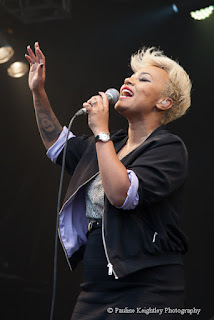
Emeli Sande

Mogwai

Siobhan Wilson
Karine Polwart
Nicola Benedetti

Blue Rose Code

Atlas for Scotland by Andrew Barr


Andrew Barr puts Scotland on the map 

-        first Atlas of Scotland in more than a century


 What Scotland is and what Scotland could be


Artist and writer Andrew Redmond Barr has launched an ambitious new project to create the first major Scottish atlas for over 100 years.

Combining text with illustrated maps, the Atlas of Scotland will shed new light on Scotland’s size and resources, its cultural and political history, as well as its long standing as one of the ancient kingdoms of Europe and the richness of its international connections.


Andrew explains the inspiration behind the project: “When I graduated from university in the summer of 2014, there was a lot of anticipation and excitement building around the independence referendum.

“Since then, the question of what Scotland is and what it could be in the future seems to have stuck in people’s minds.

“Creating an atlas feels like a way of taking stock, of looking in detail at what Scotland actually is, what it’s made of and where it stands, as well as telling the story of Scotland’s rich past.


He is the author of two published books, Summer of Independence (Word Power Books 2016), looking at the 2014 independence referendum from a cultural perspective, and The Illustrated Declaration of Arbroath (Saltire Society 2019), which was designed to celebrate the 700th anniversary of one of Scotland’s most important artefacts earlier this year.


“While the atlas will cover some of what is already widely known about Scotland and its history, it will also deliberately seek out the unusual, the forgotten or the overlooked.

“Those are the parts I think will be most enjoyable for readers,” he smiles.


“I’m always open to new ideas to make my work accessible to different audiences.”

andrewrbarr.com


I believe in Scotland

 #IbelieveinScotland

Because I believe Scotland is held back by the UK union, by a London centric Anglo-British-ness that does not understand or have much interest in Scotland’s future or present. 

Tuesday, 30 November 2021

Walter Scott, wizard of the north


Walter Scott, (1771 – 1832), was a Scottish historical novelist, poet, playwright and historian. Many of his books are classics of European and Scottish literature. Walter Scott is greatly misrepresented today though and sometimes thought of as the planner of a tartan Edinburgh for George IV's visit to Leith, the first British monarch to visit Scotland for 200 years! Waverly station is named after Scott's hero. In his day late 1700s, Scott was widely read and one of the most famous authors. This year is the 250th anniversary his Scott’s birth. The Scott monument rises tall over Princes street gardens and Scott clearly had a huge influence on Scots culture and heritage. Yet how many of us today read his works? 

At the age of 14, he met Robert Burns at an Edinburgh gathering and wrote about and was in awe of the genius poet: when he wrote, “[Burns’] person was strong and robust; his manners rustic, not clownish, a sort of dignified plainness and simplicity which received part of its effect perhaps from knowledge of his extraordinary talents….There was a strong expression of sense and shrewdness in all his lineaments; the eye alone, I think, indicated the poetical temperament. It was large and of a dark cast, and glowed (I say literally glowed) when he spoke with feeling or interest. I never saw such another eye in a human head, though I have seen the most distinguished men in my time…His conversation expressed perfect self-confidence without the slightest presumption. Among those who were the most learned of their time and country he expressed himself with perfect firmness, but without the least intrusive forwardness; and when he differed in opinion, he did not hesitate to express it firmly, yet at the same time with modesty.

Scott met poet Robert Burns
Scott had the good fortune to study moral philosophy and history, the former taught by Dugald Stewart and the latter by Alexander Fraser Tytler. Both these major figures of the Scottish Enlightenment had a huge influence on Scott, the former with his belief that moral philosophy should be the study of man in society while the latter preached an empirical approach to history.

Scott was internationally famous in his day

There are a great many views of the controversial novelist- He believed in the benefits of union, but he also believed in Scotland’s right to be a nation and fought for Scotland to keep its bank notes. 


Scott is remembered today for his friendship with George III and for draping his visit by boat to Leith, in tartan 1822. Scott tried to straddle both camps – unionist and patriot and romantic Jacobite

– and in so doing alienated some Scots. But in his day he was much celebrated. He was fascinated by history. He recovered the Scottish crown jewels, now exhibited at the Edinburgh castle, which were discovered deep in the castle and had been hidden since the union. 


The Scotland Scott represents in his work is very different to the one Burns wrote about. Burns walked in all parts of society. It seems to me it is Scott that has a Romanised view of what the union with England meant for Scotland, with only 3% of Landowning men having a vote.


Scott wrote on movements within culture and society at times of transition and seismic change.

Scott was intrigued by the way different stages of societal development can exist side by side in one country. In a discussion of his novels the poet Coleridge observed they derived 'long-sustained interest ' from 'the contest between the two great moving Principles of social Humanity—religious adherence to the Past and the Ancient, the Desire & the admiration of Permanence, on the one hand; and the Passion for increase of Knowledge, for Truth as the offspring of Reason, in short, the mighty Instincts of Progression and Free-agency, on the other'.


**His best known Poems by Scott’s include – 

Bonny Dundee, Lochinvar, Lady of the Lake, 

Scott’s Novels – 

Waverly, Ivanhoe, Rob Roy, The Heart of Midlothian, Kenilworth, Redgauntlet, Bride of Lammermoor, Marmion,


The American song for the President, “Hail to the Chief” was taken from Scott’s narrative poem Lady of the Lake.


As well a historical novels, he wrote reviews, the Life of Napoleon Bonaparte, Tales of a Grandfather. He was a member of the Society of Antiquaries, Fellowship of Royal Society Edina, Edinburgh Speculative Society.

Historical context: Scotland joined the incorporating union in 1707, Jacobites defeated 1745, Highland repression and clearances and calls of reform, when only 3% of landowning men had a vote. Battle of Waterloo, economic collapse. Radical war 1820, radical road Edinburgh.

Abbotsford
George IV arriving at Leith 1822

In his later years he built Abbotsford near Melrose. Abbotsford is a House of history, with 1400 acres, 4k trees, He was also a lawyer and evolutionist and was part of the Tory establishment. Advocate 1792, then sheriff deputy of Selkirkshire and later clerk of the court sessions. His face continues to be on Scottish banknotes today.

In 1826, Scott’s wife died, Britain suffered financial collapse, publishers were bankrupt. Scott worked on his Magnus opus to pay off debt.


Scott wrote “When we had a king and a chancellor and parliament – men o our ain, we could aye peeble them wi stanes when they wean gude bairns, but naebody’s nails can reach the length o Lunnon.”


Scott was by far the most popular poet and novelist of his time.


' Bonnie Dundee is the title of a poem and a song written by Walter Scott in 1825 in honour of John Graham, 7t Laird of Claverhouse, who was created 1st Viscount Dundee in November 1688, then in 1689 led a Jacobite rising in which he died, becoming a Jacobite hero. The older tune Bonny Dundee adapted by Scott had already been used for several songs appearing under variations of that title and referring to the bonnie town of Dundee rather than to Claverhouse. Scott's song has been used as a regimental march by several Scottish regiments in the British army. 


For the love of the bonnet of Bonny Dundee."

Come fill up my cup, etc. 

The Gordon demands of him which way he goes?

"Where'er shall direct me the shade of Montrose!

Your Grace in short space shall hear tidings of me,

Or that low lies the bonnet of Bonny Dundee.

Come fill up my cup, etc.

"There are hills beyond Pentland and lands beyond Forth,

If there's lords in the Lowlands, there's chiefs in the North;

There are wild Duniewassals three thousand times three,

Will cry hoigh! for the bonnet of Bonny Dundee.

Come fill up my cup, etc. 

"There's brass on the target of barkened bull-hide;

There's steel in the scabbard that dangles beside;

The brass shall be burnished, the steel shall flash free,

At the toss of the bonnet of Bonny Dundee.

Come fill up my cup, etc.

"Away to the hills, to the caves, to the rocks

Ere I own an usurper, I'll couch with the fox;

And tremble, false Whigs, in the midst of your glee,

You have not seen the last of my bonnet and me!"

Come fill up my cup, etc.

He waved his proud hand, the trumpets were blown,

The kettle-drums clashed and the horsemen rode on,

Till on Ravelston's cliffs and on Clemiston 's lee

Died away the wild war-notes of Bonny Dundee.

Come fill up my cup, come fill up my can,

Come saddle the horses, and call up the men,

Come open your gates, and let me gae free,

For it's up with the bonnets of Bonny Dundee! 


Crucial to Scott's historical thinking is the concept that very different societies can be observed moving through the same stages as they develop, and also that humanity is basically unchanging, or as he puts it in the first chapter of Waverley that there are 'passions common to men in all stages of society, and which have alike agitated the human heart, whether it throbbed under the steel corslet of the fifteenth century, the brocaded coat of the eighteenth, or the blue frock and white dimity waistcoat of the present day'. It was one of Scott's main achievements to give lively and detailed pictures of different stages of Scottish, British, and European society while making it clear that for all the differences in the forms they took the human passions were the same as those of his own age. His readers could therefore appreciate the depiction of an unfamiliar society while having no difficulty in relating to the characters.


Some Nations are Prepared for Climate Emergency


Some nations have been preparing sustainable, circular and resilient economies for decades now! A good example is Norway, who gained their independence in 1905, from Sweden. (Norway celebrates its Constitution Day May 22 each year, after its 400 year union with Denmark which ended in 1814). Not only did they manage their oil and gas efficiently (taking out 100% rather than 50% as in the UK) they built up a pension oil fund for Norwegians of one trillion. Norway has also built their towns beside waterfalls for green Hydro energy, so they only rely on Gas for a mere 5% of their energy supply. They also run their own Norwegian energy company, rather then being exploited by giant global oil companies.

Denmark focused on funding renewable innovations 20 years ago and now leads the way with the manufacture of wind turbines and wave power, worth 70 billion to their economy. While Germany has focused on well insulated homes and solar energy. Scotland is hosting the world’s largest wind farm Aberdeen and testing the world’s largest tidal farm Moray Firth, and offers ideal locations, but because of the UKs lack of investment Scotland is sadly missing out on the future of the Renewables industry.

Meanwhile Scotland also has poorly insulated homes, so there’s no clear solution here in the UK at all. All the talk of heat pumps will not work for most homes, without an electric backup system. There’s been no long term planning, for a greener, sustainable future by the UK government - but rather an ignorant recklessness, which results from the confrontational and divisive nature of UK politics.

And the richest 1% waste money on needless luxuries such as space rockets and avoid paying tax – have they no shame? While our world burns and floods….. have they no shame? Instead of selling weapons of war, the UK should focus on the future of our planet! The richest must be answerable for their careless, unthinking attitudes. This includes the uncaring Tories.

The richest nations, must give back and pay for the cost for the exploitation of the poorest nations. And what of China and India? The future will be renewables, not dirty, polluting fossil fuels. Where is any moral compass? I’d hope to see more women leaders who will promote a more rounded well being society – instead of nations at war. The UK is the biggest seller of arms.

While the world is better connected, globalization and the internet has led to a dark side, with dark money and dark forces lobbying, and corruption is undermining our democracy. Its essential we fight back. Dark money has led to extreme right wing, controlling populism (such as Brexit).

The arts and culture were excluded from COP26. Even while it’s the arts that change hearts and minds, and not number crunchers! (SNP take note!). Change often does not happen because of number crunching or even “facts”, but because we imagine better! There are two songs that speak volumes about humanity's reckless exploitations – one by the Bob Dylan who grew up who grew up under the threat of the bomb, and he wrote his haunting 'Masters of War' and the other by Robert Burns who grew up with the threat of war with France when he wrote 'Westlin Winds'.

Thursday, 11 November 2021

March for Climate Action Day Glasgow COP26! - Scotland’s motto is “Bairns not Bombs”


The Real Voices for Climate Justice speak out! - Scotland’s motto is “Bairns not Bombs”

Over 100K, by far the biggest march during COP26 in Glasgow, took place Saturday 6th November 2021, as part of the Global day of Action for climate change. If the diversity, enthusiasm, belief and energy of those marching, and chanting for change to insistent drum beats could be bottled we’d have change immediately!


The march was good natured and fun with people of all ages and from all corners of the world who want their voices heard! They marched morally for a just transition. Many different activist groups took part – indigenous peoples group, Scottish green party, All Under One Banner (AUOB) for Scottish Independence, for a greener, sustainable, inclusive, well being Scotland free of nuclear weapons. And many more besides. 


It seems that world leaders and democracy is failing us. Some might ask how urgent is the climate crisis, our planet now faces? We only have to look at the images of grey, dead coral reefs (once multi-vibrant colours), ice caps melting, violent storms and floods – to see we are reaping the devastating aftermath of careless Global “growth”


There are many voices calling for action now – later will be too late, telling us we have no time to loose now. Vague promises are of no use anymore. I see my grandchildren’s faces and I hope there is a future for them.


How ironic that the UKs Trident nuclear subs are housed just up the road at Faslane naval base and peace camp. Scotland’s motto is Bairns not Bombs and we don’t want to store these disastrous weapons near our largest city.


A majority of Scots don’t want Trident in our waters, we don’t want Brexit, we want fairer welfare and pensions, investment in renewables and we don’t want a Tory government. So why do Scots have to be the caterers and not have a seat at the table of the Climate Conference? Why are Scots alone in not wanting independence? Scots my once have been the engine of an empire but now we’re not even partners.


Many now believe climate is the top of the agenda and cannot be ignored. its complex too. There are several issues to address - Biodiversity, forests, energy supplies, the oceans, reducing meat, using local, transport, and giving back to indigenous peoples. The Covid pandemic showed us that the world can act when it decides to – with all nations putting money into their pots to deal with the crisis. People are now not asking, but demanding change.  


We must address our own actions, science and the land and oceans.

The question is how do we change?


We must develop Renewables much faster! Ban private jets, massive yachts,

And the indigenous peoples of the world, cannot be ignored. In the developing nations morally we know greed is a sin and we need to give back to save our planet. There is many lands under threat because of the industries of the developed world. Time to pay back.


Do we fight Big Business. Democracy is failing us…One way is for our politicians to stop fooling us and to stop talking about this growth. 


Instead we need cleaner air, better quality of life. After this moving Glasgow march for social justice and part of the Day for Action to save our planet, on the train I passed the pristine white village of the COP26 climate conference, where the world leaders were in a ring of steel. And I thought our only hope is for People Assemblies for change, made up of civic groups, academics, scientists and the professionals – who can see the answers and understand the urgency. 


Cop 26 Protesters include - Pacific climate warriors, Ocean Rebellion, Greenpeace, Green Party, 

Extinction Rebellion