Tuesday, 31 May 2022

Scottish Art and Anti-Scottish lobby


The Scottish Reformation 16th century introduced a democratic structure to run the church and education for all. Scots were the most educated people in Europe. 

However in recent times those recruited to run Scottish arts have been mainly recruited from England, who clearly have no knowledge of Scots heritage, history, language, music or arts. And this is "all designed to imply that Scotland is a dull backwater which has never produced anything of importance.” - writes Paul Henderson Scott in his book Scotland: A Creative Past. This was also a result of the extreme centralising in the UK during the wars of the 20th century.


The exception is Celtic Connections, whose artistic director is Donald Shaw from Oban (Capercaillie). In a new improvement in 2022, violinist Nicola Benedetti has become the first Scots (and first woman) director of Edinburgh festival. Nick Barley from Yorkshire, is director of Edinburgh book festival. 


- In her article Scotsman Carol Craig writes  of, ‘The Scottish crisis of confidence about Scots feelings of inferiority.”


- Crawford Beveridge, first chief executive of Scottish enterprises 1990s, stated that the major problem facing Scotland is “a lack of self-belief.”


 How can this be true in a country that has contributed so much to the world in ideas, inventions, literature and arts? The answer is that education of many Scots has left them in complete ignorance of all of that. London became the main centre of the British empire. Back early 17th century, James Stewart VI of Scotland and England  in a treaty with clan chiefs on Iona, had them agree that their eldest sons would be educated in England.


One problem is the number of private schools in Edinburgh (at 25%) and with English students dominating Edinburgh university and St Andrews. #¥esScots


BOOK – Scotland: a creative past, an independent future, Paul Henderson Scott-

https://blackwells.co.kshop/product/


Saturday, 30 April 2022

Privatization of Channel Four


The Tory party has plans to privatize channel four. Its been widely reported that the broadcaster has supported more local innovative and independent productions and that the is Tory revenge for their perceived anti-Tory reporting. CH 4 is a highly successful broadcaster.


Nadine Dorries is a lightweight embarrassment as the tory culture minster and in interviews was not aware that while ch4 is publicly owned, it pays for itself with advertising – a unique model. 


The loss of legend broadcaster Jon snow last December was felt keenly. – after his 32 years with the broadcaster ,he said “its been the greatest privilege of my life to bring you the news.”


According to reports a privatized CH4 would face possible 50% cuts to its £660m program budgets - – spent on content such as news and current affairs, Gogglebox and It’s a Sin – to force its model into that of a commercially-focused broadcaster. This is likely to mean cuts to content that does not bring in much income from advertising, which Channel 4 relies on for more than 90% of its £1bn annual revenues, such as news.


CH4 has set up offices in Leeds and Glasgow which would probably have to close.


Who owns Channel 4?

Channel 4 was established by Margaret Thatcher’s government in 1982 to provide a culturally challenging alternative to BBC One, BBC Two and ITV. It is publicly owned but commercially funded. Unlike the BBC, which is funded through the £159-a-year license fee its viewers must pay, Channel 4 has no financial support from the taxpayer.


In 2017, the culture secretary Karen Bradley formally ruled privatization out, saying Channel 4 was a “precious public asset” that would “continue to be owned by the country”. Instead, the government pushed for Channel 4 to relocate significant parts of its operations and staff out of London. About 300 of its 800 staff have now moved to new “national” headquarters in Leeds, as well as “creative hubs” in Bristol and Glasgow.


Ultimately, it was decided that the benefits of a cash windfall to the government were outweighed by the scale of the detrimental impact on the independent TV sector.

"Jon Snow will have 'honorary citizenship in independent Scotland', says FM Nicola Sturgeon


Tuesday, 19 April 2022

To set up Scotland’s very own media


worldwide success of Outlander

Scottish Media and Broadcasting. To set up Scotland’s very own media! Yes


When the British Broadcasting Corporation BBC, was set up 1933, its strange that Scotland, an ancient nation begun 9th century, did not insist on its own media – when Scotland has always kept its church, Scots law, education and with its four ancient universities. 


Its been a cultural disaster for Scotland writes Paul Scott Henderson in his book on the Scottish Enlightenment. 


After recommendations by the Advisory Council for Arts Scotland 1981, initiated by the Saltire Society - some arts councils have set up here – The Scottish Arts Council (Creative Scotland), National Theatre of Scotland, Scottish National Portrait Gallery, (nearly closed), 


Nearly all Scottish arts councils have been run by English directors. Andrew Dixon, who ran the National galleries wanted to remove all Scottish art as he believed it was inferior and close the Scottish National Portrait gallery – but there was such an outcry and protest in Edinburgh, instead the historic building in Queen street was refurbished and reopened in 2014.


Henderson writes, “The problem is that many Scots children go through their entire time at school and learn nothing of their own Scottish culture, history or arts. This is shocking as most countries teach their national culture. Instead Scots learn about English culture which teaches them to feel second rate and inferior.” 


I have my own personal experience.

When I lived in the States, I had no idea I should be proud to be Scots – of the Scottish rich heritage – (even though I studied higher history)! I know Scots had made a few inventions. I knew of Robert the Bruc but I had no idea of the Scottish enlightenment. 

Brian Cox in Succession

James McAvoy

“Scotland’s government is responsible for Scotland’s culture, but has to ignore the most influential means of cultural expression. All the small, newly independent, nations of Europe have their own broadcasting and even the state of Catalonia has its own four tv channels.”


Are changes afoot 2022 – with the recent global successes of the series Outlander and at Cumbernauld studios; filming Batman Glasgow; Brian Cox in Succession; and several other well known Scots actors. And with Sam Heughan portraying Jamie Frazer a proud and principled Highlander.  #¥esScots


Jamie Frazer and Claire

Concert for Ukraine Perth


Eddi Reader

Concert for Ukraine Perth Concert Hall – April 20th

EDDI Reader, Dougie MacLean, Blazin’ Fiddles and The Vale of Atholl Pipe Band  


Scots Makar Kathleen Jamie will give a readings of collective poem Our Waking Breath – a Poem-Letter from Scotland to Ukraine, created from single lines submitted by the public.


Tickets are selling fast for the concert, has already raised over £15,000 for the


Disaster Emergency Committee (DEC), Ukraine Humanitarian Appeal – 

and anyone who wants to come along is being urged to act quickly as the concert is expected to sell out.


Tickets cost £25, with all net proceeds from the event being donated directly to the Disaster Emergency Committee (DEC), Ukraine Humanitarian Appeal.

Tickets are available at www.horsecross.co.uk; Phone, 01738621031, in person, between 10am - 4pm Monday to Friday at Perth Theatre Box Office.


Blazin Fiddles

Perthshire-based poet Jim Mackintosh, who is organising the event along with Horsecross Arts, Alan McKinnon, Dave MacFarlane and Graeme Roger, said: “I’m humbled at the response from the Scottish creative community.


“When we came up with the idea to do the concert, everyone we asked who could possibly rearrange their lives to be able to perform said yes. Once word spread among artists, we were actively contacted by several top names who wanted to get involved.


“The concert is obviously going to be full of emotion, but we do want people to come along and enjoy themselves and feel proud that they are doing something, albeit a small thing, to help the people of Ukraine.


 “And if people can’t make it but still want to show their support, they can still donate to the appeal through the Concert for Ukraine webpage.”

All the performers and their technical support have donated their services, and Horsecross Arts has waived the hire fee for Perth Concert Hall.


Thursday, 31 March 2022

Glasgow named as City of Music

Laura Marling

Cara Dillon and the RSNO

Hiam


Glasgow is a vibrant and exciting city of music, with the diversity and range of music venues. It has a slightly wild, irreverent and challenging side. Many musicians also say Glasgow audiences are the best!


From the concert hall to the modern 14K seater Ovo Hydro; iconic mid-size venues and the large number of small venues. World renowned venues include – the Barrowlands, King Tuts, Oran Mor and the Old Fruitmarket. These venues offer a close up and intimate live music experience.


There is also the unusual and historic venues – the Tall Ship, on the Clyde, the Macintosh church, Nice n Sleazys, St Lukes, Brel. All this matters in terms of building a healthy and active grassroots music scene for the future. Plus a number of busy folk clubs, jazz bars and more.


Over the past years I’ve been to many memorable concerts and taken photos of my musical heroes. I saw my music and lyrics hero Bob Dylan on the Braehead arena - I have to assume he found the large SECC arena impersonal and remote for his previous gig here. I went with my teenage son and his audience is certainly a broad church – from the dedicated disciples who go to every concert, to the curious. At 70 Dylan is a proliferate as ever with a new album release in 2020, with his stunning, immersive songs.


Rab Noakes

Karine Polwart
 

Another icon was Paul Simon, Clyde Auditorium, which was uplifting and joyous. Plus Fleetwood Mac, Elton John, Neil Young. Paul McCartney.


On the smaller stages – Arcade Fire, Barrowlands; Admiral Fallow, King Tuts; Hiam, 

Oran Mor, Emeli Sande; Karine Polwart, Tall ship.


Blue Rose Code


Emeli Sande
 
I’ve seen other folk heroes at both Celtic Connections and Milngavie folk club - notably the legends Dick Gaughan. Dougie Maclean, Rab Noakes, Gaelic singer Julie Fowlis. And Blue Rose Code (Ross Wilson) was another favourite.


Plus the excitement of taking photos at the Royal Albert hall London for Emeli Sande!  2012.

I’ve taken photos at many top class gigs – its often been a thrill and an honour with the buzz of the pit and the adrenalin rush to try to capture the right image, that not only tells the story but the artist expressing their innermost reflections.. 

Music photography expresses my passion of both art and music.

The Arts and music is a huge industry for the UK and for Scotland. 


Glasgow boasts lively Trad sessions, decades of history, iconic venues, intimate gigs,


 Outstanding festivals, passionate audiences, record shops, 


Proclaimers

Mogwai


Kathryn Joseph


Admiral Fallow

Reasons for Scotland’s Independence

Many write lengthy reasons for why they want to see Scotland’s independence, as I have too - and there are many reasons certainly. Many people don’t have the time for complex explanations. Here are my main reasons - Democracy, Economic, elites, Resources, Culture, History & Belief. 


Scottish Democracy.  Scotland does not get the government it votes for, for the past 75 years. This is mainly because of an out-dated first-past-the-post voting system.  On top of this the UK boasts the largest unelected second chamber (after China). The UK is a failed and superficial democracy. The first Parliament of Britain was set up as long ago as 1707, before universal suffrage or a constitution and crucially Westminster shows no sign of any desire to reform. The UK abuses the powers of the “Crown” with its highly centralised state.

Constitution. The UK operates with no constitution, so I want a new Scotland to set up a constitution to protect our human rights and protect democracy. 


Economic. One main reason is economic. The UK economy has been set up for decades to service the city of London – to increase its house prices and serve the finance centre. This holds back and sucks from the rUK, and means any manufacturing base is discouraged. Manufacturing business is the basis for a healthy economy. In order for Scotland to have economic control we require our own currency and central bank. 

Elites. Another reason is the unworthy elite, and the UKs proliferation of Boarding and Private schools. This 2-tier system holds back large numbers of children from future successes.

And leading on from this is Social Justice – so all children are given a fair chance in life. Otherwise our nation is held back .This is not about being equal, because clearly we’re all different, but about fair opportunities.

Resources. For Scotland to control our own resources and land. Our resources have been exploited and stolen for centuries.


Another is Cultural. 

To improve our knowledge of our past stories and our sense of place: to know our heritage in art, music, literature. Scotland suffered centuries of having our Scots language, culture and history suppressed. Scotland is one of the oldest nations in Europe and dates back to the 9th century – so its very important to protect our stories, culture and history. 


History. The teaching of history urgently needs improved and to continue history teaching throughout primary and secondary schools and to move on from projects on the Roman empire, to broader and more recent topics of Europe, America, and Scotland. Scotland was at the centre of the Enlightenment, Post Reformation with many top scholars taught in Paris and key figures such as - John Mair (1467-1550), James Dalyrumple (1619-1695), Duns Scotus (1265 – 1308),  Francis Hutcheson, 1694 –1746), George Buchanan (1506 – 1582), David Hune (1711- 1776), Adam Smith (1723- 1790). Scotland was a much part of Europe as France!


Scots Media and Broadcasting. To set up Scotland’s very own media. When the British broadcasting corporation BBC, was set up 1933, its strange that Scotland, an ancient nation begun 9th century, did not insist on its own media – when Scotland has always kept its church, law and education. Its been a cultural disaster for Scotland,

Security. To set up a proper defence system. 

Belief. In Scottish people and our ability to make our own decisions. 


What Scottish independence is NOT – it is not about nationality. Scotland is multi-national and international. Scotland welcomes all who want to make their home here. What Scotland independence is about, is making our own decisions for our ancient nation with a new de-centralised model and greater local government. Boris Johnson keeps calling those who want Scotland’s democracy “nationalists” – this is totally fake and WHY is he allowed to keep calling the SNP the ‘Nationalist party? He thinks this slow drip is very clever and the SNP must fight back with a SLOGAN – 

‘SNP for Scottish democracy” and make it much clearer what we are fighting for here. 

The National stands for the nations best interests. 


We might argue also in these times of turbulence Scotland needs the protection of independence more than ever before - to secure our energy policy, protect our resources and economy, protect our jobs, and futures and much more besides. We don’t need every detail decided ahead, only broad outlines, because the whole point of independence is to be flexible, innovative, creative and adaptable! 


There are no risk free options, rather we must consider what path is in our country’s best interests.  (OR a so-called union that holds Scotland back.) The Scottish independence movement must now make the Westminster supporters or the unionists defend their positions! Tory catastrophes – Windrush scandal, Grenfell, Brexit, Covid failure and deaths, bombs to Yemen, billions to PPI scandal. (Plus the Failures of the Labour opposition).


The UK portrays itself as a ‘benign democracy’ – when the reality is that the powers of the crown means a highly centralized government, that is often unaccountable, corrupt and elitist. I hope an independent Scotland gives us the chance to meet these challenges and to build a reformed and better Scotland.


Ultimately the Scottish Independence question becomes - is Scotland a nation with its own culture, history and stories distinctively and if so, how is Scotland best governed? The national interest is considered  a good thing around the world! The question returns to – is Scotland a distinct nation or simple part of Britain? It used to be Scotland was an integral part of the UK – but today the Scottish Parliament has less powers than a hundred years ago. The biggest issue driving a wedge into the UK right now is English nationalism.


Step back for the bigger picture with the crises of rising seas, loss of workers rights, drives to net zero and. It truly makes so much sense for Scotland to forge its own future in the 21st century. Any arguments to hold onto the past mistakes only ring hallow and false. We shouldn’t hesitate to vote for the future and not the past. Enlightened thought matters as much today as it ever did.


I don’t know if these reasons are in order of importance, because culture seems central and all about how we see ourselves. It is the smaller nations that are more successful and adaptable. With only limited devolution powers it is not possible to achieve these goals. Only with full independence. #¥esScots


(**In 2022 we see the passion and drive of Ukrainians. Theirs is a fight is between democracy, their rights and freedom AND autocratic dictatorship, that rules through fear. )


Art Exists to Give


 It is the work of minds alive,


“The great works of literature are inexhaustible- that is one of the things that makes them great. However often you go back to them, they will always have something new to offer.”


"Re-reading is one of the great pleasures that literature offers us.”


A little History of Literature, John Sutherland, IBSN 2014


 “Art exists to give, it is the work of minds alive.”

 "Since government know full well that an ignorant electorate is easier to guide, their interest by and large is not to educate anyone and certainly not to invest in the arts.”

McGrath – “We are in the hands of people with no concern for cultural well being” – 


BOOK – A GOOD NIGHT OUT, Popular theatre, audience, class and form (1987 John McGrath)


Theatre – directness, comedy, music, emotion, variety, effect, immediacy, localism of place, location of performer,


Commercialisation -TV sells American sports, sentiment, patriarchy, tv sells news as a commodity. 


“a set of tricks or disasters adding up to a fictional construct of the world.” The values espoused as fundamentally conservative.

TV is advertising – advertising exists to take stuff from you. Art exists to give."


The Plantations of Ireland


There is a great ignorance of history here UK. 

In European countries history is a main subject and is taught right throughout secondary school.

Here UK, history (unless a chosen subject) stops after only two years.

I firmly believe in order to understand correctly, analyse and imagine a better future, we must teach history and crucially modern history in our schools (and not the Tudors or Romans over and over!). 

An important story is Irelands independence and the Irish Plantations – not taught even in northern Ireland.  Even though I studied history to higher level in Edinburgh, I learned nothing of Scotland’s history – how bazaar! (By a unionist led curriculum). 


Henry VIII
**IRISH PLANTATIONS 1500s

1542 – Henry VIII, Tudor King of England, declared himself King of Ireland. 

Under Henry VIII 16th century, the Tudor expansionism and plantation of Ireland began and was continued under his daughter Elizabeth. Henry claimed he was bringing peace to the warring Irish tribes. (much as Putin is claiming today)


The Pale around Dublin had been under English control. It was decreed that it was a barony’s right to sit on the Irish House of lords. The Irish law of the tribes did not suit such an arrangement, because the chieftain did not have the required rights – and the plan was abandoned in 1563. There followed one million deaths due to famine, displacement, and pestilence.

There was the disruption of the Nine Years War, followed crucially by the Fight of the Earls in 1607 – the rulings O’Neills left their northern Irish territories for Europe. 


17th century – There was the War of the Three Kingdoms, Charles I executed 1649 and Thirty Years war in Europe.


In 1789 a great frost destroyed crops, 250K died, and 100K were transported to West Indies.

1798 United kingdom – Irish Catholics and Presbyterians for reform, democracy and an independent Ireland – the United Irishmen.

There was the Great Famine 1845 – 1851 when one million died, and one million emigrated (half of all immigration to US was Irish.

Ireland’s population continued its decline until 1961. Ireland’s population reduced from 8m – 4m.


1801  - UK of Great Britain and Ireland formed, governed from London; and pushes for the two kingdoms to merge to quell sectarianism, remove discriminatory laws and to prevent spread of French republicanism and calls for reform for democracy.


*Ireland’s Independence

Daniel O’Connell and Charles Stewart Parnell, campaigned for Home Rule 

Late 19th century, (Irish nationalists MPs), Westminster committed by the Liberal party, to Irish Home rule, first bill defeated, third Home rule was introduced, suspended by first World War. The Conservatives opposed and threatened violence and 1914 weapons smuggled from Germany by the Ulster Volunteer Force, to oppose Home rule for Ireland. 

Homerule bill passed 1914 but the First World War delayed the act.


*Easter Rising 1916

For full independence rather than Home rule. Irish Convention 1917-18

– by the Irish citizens army – after which 15 leaders were executed over 10 days and one thousand imprisoned. This changed opinions – and support for Irish Republicanism increased because of the war and conscription crisis.

Sinn Fein, won election 1918, and proclaimed Irish republic (Dail Eiream)


British Lloyd George proposed Home rule.

Fourth Home Rule to divide Ireland was passed May 1921, with the creation of Northern Ireland - with 26 counties Dublin/ 6 countries Belfast.

1921 Great Britain and northern Ireland formed.


There followed 3 years of Irish civil war

December 1923 – Anglo-Irish Treaty

Eamon de Valera ended 1923


Ireland had to fight for its independence. Union/ Plantation caused huge loss of population, and Irish Gaelic and culture were suppressed. 

Since Ireland joined the EU it now does most of its trade to the Europe and has a hig level of economic growth. 


***Important dates many of us know little about -

Ottoman empire

War of the three kingdoms

Thirty years war

Elizabeth Stuart


Wednesday, 16 March 2022

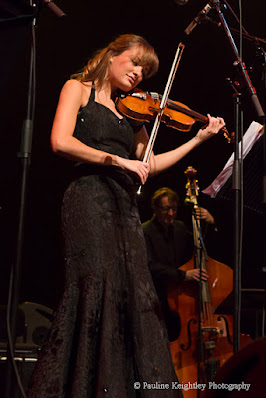
Nicola Benedetti First Scots Director of Edinburgh Festival!


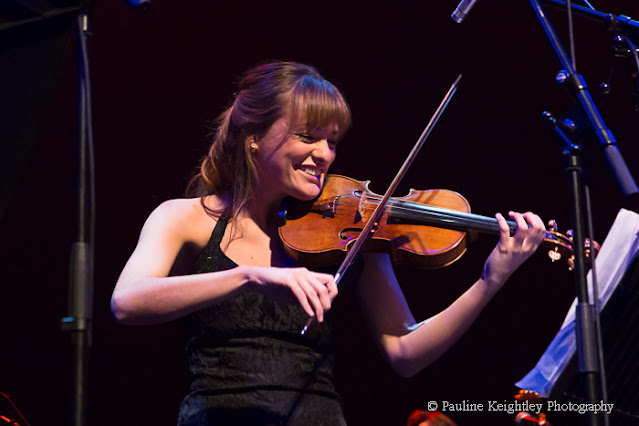
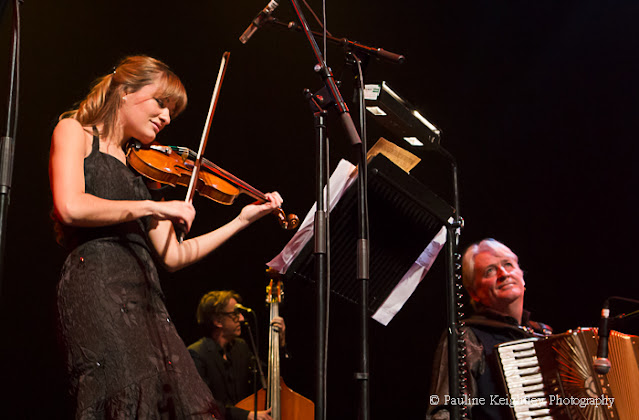
Nicola Benedetti Celtic Connections 2012

Classical violinist Nicola Benedetti has been appointed as the new director of the Edinburgh festival – the first Scot and the first woman, since its start after the second world war in 1947!


The festival prepares to celebrate its 75th anniversary next year 2023 and event director Linehan (previous director) wants the event to be a “huge civic event from celebration to requiem.” Russian Conductor Velery Gergieu, (as a result of incursion and war on Ukraine by Russia) has been asked to resign as honorary president by the festival  - Edinburgh is twinned with Kyiv, Ukraine’s capital     https://www.eif.co.uk


I first saw Benedetti perform at the opening concert of Celtic Connections in 2012. She had been collaborating for an album with Shetland fiddler Ali Bain and composer Phil Cunningham Her playing was magical and elevating. 


Benedetti began violin at age four. At 10 she began studying ta the Yehudi school, Surrey. She sat Grade 8 at age nine. Benedetti has performed with the RSNO, Scottish opera, LSO, Scottish chamber orchestra, London Sinfonia. 

Awards, Young BBC Musician 2004, member Royal Society Edinburgh 2017. (MBE 2013, OBE 2019.


Grammy 2020 for Marsalis violin concerto, fiddle dance suite. 

Benedetti was given a 1717 Sradavinsky by LSO board member Jonathan Moulds. 


Nicola Benedetti is an arts educator and ambassador for classical music. She improves the lives of deprived children through Sistema Scotland and the Big Noise orchestra. She enjoys exploring new music and challenging new ideas. 


https://www.nicolabenedetti.co.uk